
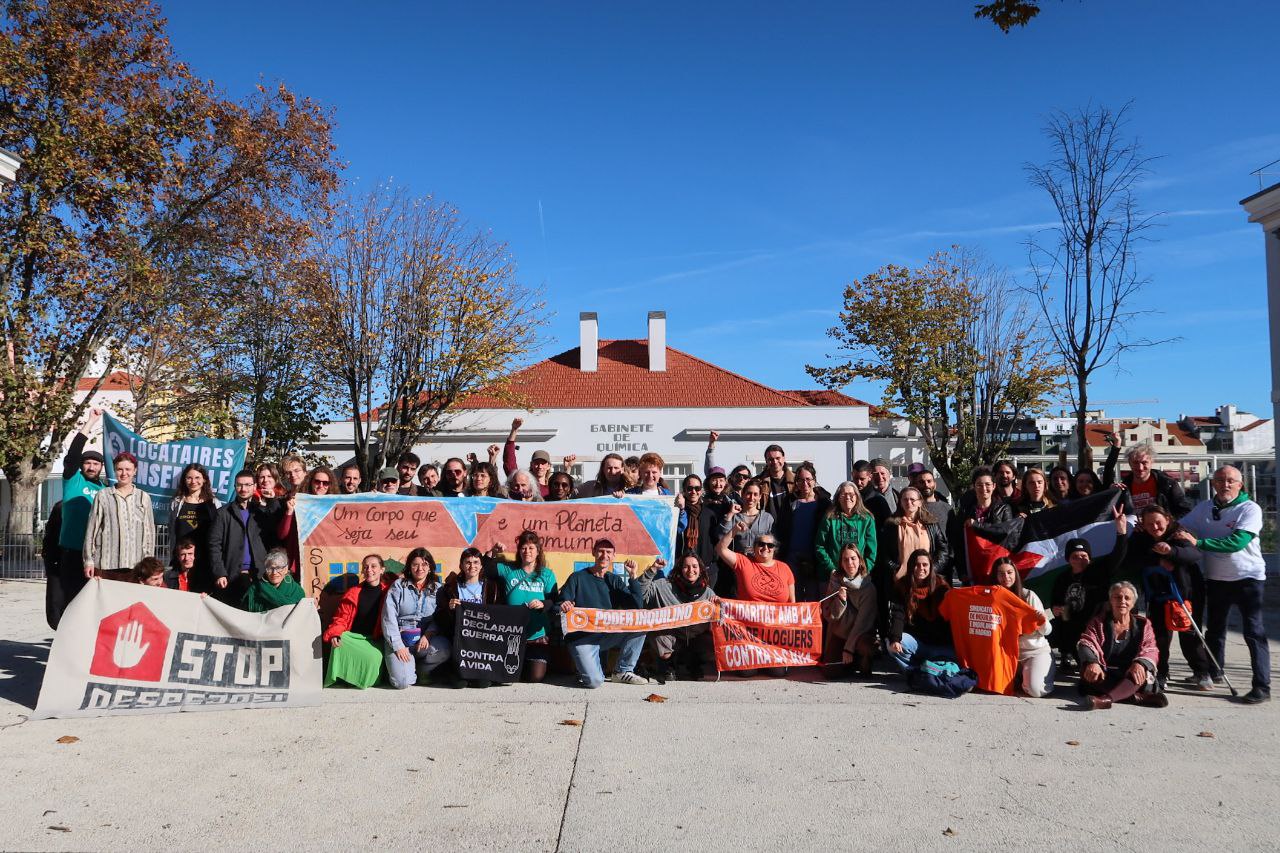
From Thursday 27 to Sunday 30 November we took part in Lisbon in the meeting of the European Action Coalition, a coalition of European organisations active and struggling for the right to housing and the city.
More than 50 organisations participated in the meeting, active both in the housing movement and in the climate movement. First of all, a big thank you to the EAC for having us participate! For us, Municipi Sociali and ORDA – Osservatorio Reggiano per il diritto all’abitare – the meeting was very important in order to bring back to our territories insights and examples of struggle against the owners of the cities. This contribution aims to do just that, and that is why we are publishing it both on MunicipioZero and on LineaReggiana.

During the days in Lisbon we met several organisations from different European cities, and we asked some of them for a short interview to explore themes and characteristics of political action that we consider interesting to deepen; as you read through these lines, you will find the voices of Filip from PravoNaGrad (Right to the City) of Zagreb (Croatia), Vita from the Ukrainian tenants’ union, and Paulo from Habitação Hoje of Porto (Portugal).
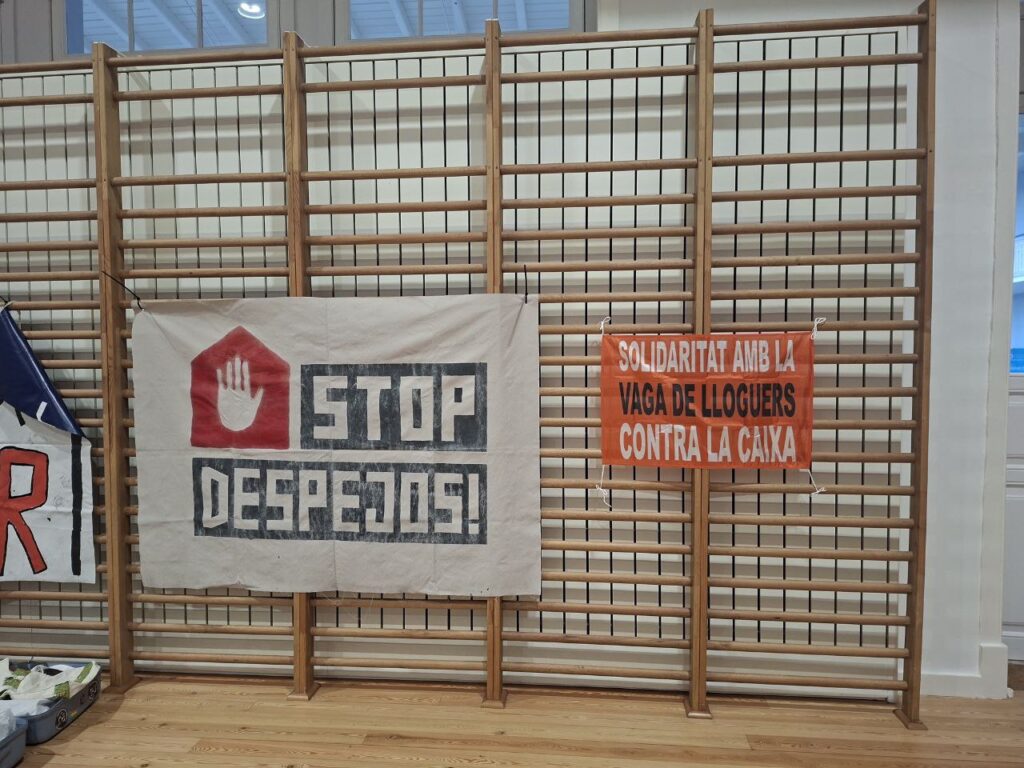
First of all, we must note that the EAC is a very heterogeneous space and includes mainly organisations specifically active in the struggle for the right to housing, and therefore structured in a specific manner for this purpose, although they are also active, peripherally, on other issues. This is the first thing we mention because for our organisations, Municipi Sociali of Bologna and the Spazi Sociali of Reggio Emilia, it meant interfacing with organisational forms quite different from ours. We are not saying here that we are better or worse, but we are reporting an objective fact: there is a plurality of political organisations, and the goal – which was also discussed in the assemblies in Lisbon – must be to confederate the struggles. For example, the organisations from Madrid and Catalonia often explained that they are carrying out this type of work in their territories, together with the struggles they are conducting against Blackstone or La Caixa Bank.
While we work daily with projects of mutualism and care, there are those who organise apartment buildings to fight against their real estate landlord. For us it was extremely stimulating to participate in discussions on how tenants organise collectively, because in Italy, for example, this is something that is rare to find. Even in our help desks for housing rights, we have asked ourselves this question: how can we ensure that the problem of rising rents, evictions, lack of maintenance, non-renewal of leases, or the sale of a building does not remain an individual grievance but becomes a collective struggle?
In this regard, the examples from Madrid and Catalonia are very important. In Madrid, the Tenants’ Union organises thousands of people in neighbourhoods through union mechanisms but focusing on collectivising the struggle. Starting from the premise that the housing problem is not individual but collective, they bring people together with and among themselves to improve living conditions in their homes, prevent evictions, and stop the landlord from doing whatever they want with the lease. The most powerful experience they shared is the rent strike organised against Nestar-Azora, the third-largest landlord in Spain, and soon also against Blackstone: several buildings owned by by Nestar-Azora stopped paying rent. Impressive.
In Catalonia, the Sindicat de Llogateres carries out very similar work, and indeed the discussions on the rent strike and how to implement it at the European level were carried out jointly by both organisations. In particular, the Sindicat de Llogateres is leading a rent strike against La Caixa Bank, again organised together with thousands of people. Also impressive.
The question we ask ourselves is: across different organisational forms, between those who work on broader themes and are more articulated in the territory (mutualism, care, conflict), and those who work in a sectoral form on a single issue (we do not say this negatively), how can we exchange insights and examples of concrete struggles so as to share approaches and strategies?
In Madrid and Barcelona, those we met are not social centres, Municipi sociali rooted in the territory and working daily in the social sphere, while in Bologna and Reggio Emilia there are no thousands of tenants in struggle and no squares full of people against real estate funds.
It must also be said that the structure of property ownership in Italy is quite different: Blackstone, banks, and other funds are not very visible and perhaps an investigative effort should be made in the territories to understand how many properties they own and what they control. In Italy, and in particular in Bologna, property ownership tends to be held by rentiers, passed down through inheritance from generation to generation. Only with short-term rentals do we see a strong concentration of management – not ownership – of buildings and apartments in the hands of a few specialised agencies. With regard to property ownership, the situation is quite different from Spain: after the 2008 crisis, funds and banks emerged as the dominant owners.
In Lisbon we met Filip from PravoNaGrad of Zagreb, which in Croatian means Right to the City. We interviewed him to explore an aspect we consider new in Europe: cities against nations; that is, the possibility of resistance and conflict that exists in cities – such as Bologna and Reggio Emilia – against the central government, for example Meloni’s government in Italy. PravoNaGrad is an NGO born as a movement against a controversial private development project in the very center of the city. Starting from various struggles related to the growing problems of investor-driven urbanism, the erosion of public space, and the lack of transparent planning in Zagreb, through the years PravoNaGrad developed and became a critical force in the Croatian capital.
Let’s hear Filip’s voice:
PravoNaGrad is active in Zagreb and other Croatian cities, working to increase and stimulate democratic participation of citizens in decisions concerning urban planning and the struggle for the right to housing. When we asked him about the political situation in Croatia, he told us that the centre-right central government is working to take control of all state institutions through an authoritarian model of governance, punishing citizens of Zagreb for stubbornly not voting for their party (HDZ). The previous mayor of Zagreb was in office for 20 years, and now a red–green coalition, of which some members of PravoNaGrad are a part, remaining indipendent,has won the city government, marking a significant shift. At that moment, many people active in associations and NGOs entered politics, bringing a new wind into the city.
Filip told us that, unlike the Meloni government in Italy, in Croatia the government does not carry out direct attacks on the cities but limits their decision-making autonomy and the possibility of implementing local policies, which are impossible without national authorisation. The local government of Zagreb, however, is still working on autonomous plans to guarantee the right to housing, thanks also to the work and pressure of PravoNaGrad, and importantly, they pushed for and obtained the halt to the sale of public housing by the Municipality. Even though the municipal space for influencing the market is limited, given national-level restrictive policies and legal acts, they are working on several fronts. PravoNaGrad is an indipendent NGO, and has also some members in the coalition of the government of the municipality and this, as Filip repeatedly told us during the days in Lisbon, exposes the organisation to some challenges that they often debate, but as long as they manage to influence certain matters “from the inside”, it is better to work on multiple levels.
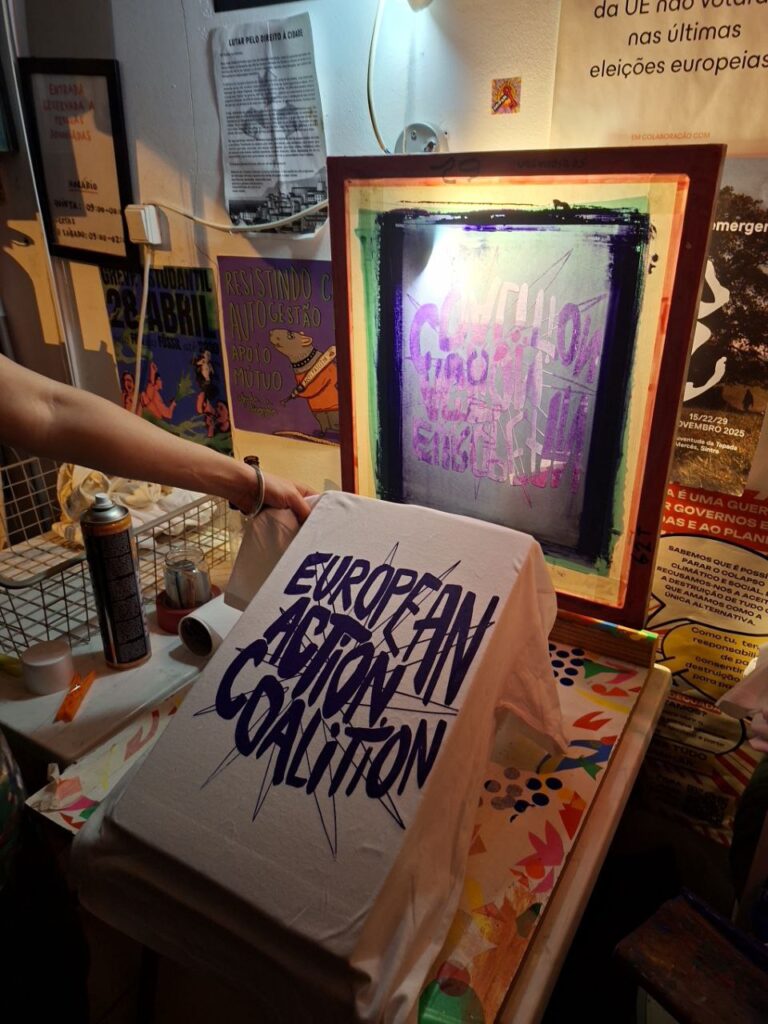
Besides Filip, we also interviewed Vita, a Ukrainian researcher at Leuven in Belgium working on housing policies, who together with others is working to establish the Ukrainian Tenants’ Union, and Paulo from Habitação Hoje in Porto, who works in the territory for the right to the city and to build a form of organisation rooted in the local context. With them, in addition to the presentation of their organisations, we explored whether and how the European sphere can be relevant for housing struggles and generally for confederating rebel organisations across Europe.
Let’s hear Vita’s voice:
First, we asked Vita about the situation in Ukraine, which, as we are all following these days, is experiencing dramatic developments: a housing crisis, destruction of homes, 13% of homes destroyed, 2.5 million housing units affected, 6 million people having fled abroad, to Europe but also to Russia, and internally in Ukraine 4 million displaced persons, but many are returning to Ukraine because the housing crisis also exists in Europe, and not finding accommodation, they try to return home.
When the war began, there was no form of social housing in Ukraine, so the only option for those who had lost their homes was to rent on the private market. Displaced from their owned homes, people moved into rented housing or to stay with family. However, the private market is not regulated, and this creates serious problems for people. This is one of the main reasons why the Ukrainian tenants’ union was created: to prevent evictions and to confront landlords’ predatory attitudes and arrogance.
For Vita and her comrades, the ideology of private property promoted by the government in this situation helps to increase the debate around rental issues and the housing crisis and to oppose it. The government says that Russia will pay for the damages when Ukraine wins the war, but according to Vita, the Ukrainian government should already be guaranteeing rights and being more realistic, and Russia’s advance on the front line is not encouraging. Russia will probably not pay the damages and people will not return home. In this situation, the Ukrainian Tenants’ Union works mainly with internally displaced persons.
When we asked her what it is like to organise for housing rights in a wartime situation, Vita explained that in Ukraine it is difficult: protests are not allowed due to martial law. War creates uncertainty, risk, instability, and therefore for them it is difficult to plan political action and they prefer to plan in the short term. Their organisation is present in Lviv, Kyiv, and Odessa, but people may not remain there. Asking about the future is difficult, and Vita is not sure how they could join the mobilisations and strikes we have seen in Europe in recent months. Europe has great influence on the Ukrainian debate, and the EU is currently dictating policies, aligning mainly with construction lobbies, but the interests of Ukraine and the EU are sometimes contradictory, so it will be a long process. If the rhetoric of property prevails, it will be a problem, for example regarding mortgages, and it will not help people. They believe the market needs to be regulated. Everyone should have a home, and in the current situation the very least the government should do is regulate the private market to provide stability for people who are renting after having lost their homes because of the war.
We conclude with the voice of Paulo, comrade of Habitação Hoje (Housing Today) of Porto:
Habitação Hoje is a political organisation that fights for the right to housing and that has recently created a tenants’ union as a legal tool to organise residents. Through public assemblies they try to collectivise individual housing problems, carrying out actions against evictions and attempting to organise rent strikes. One aspect he emphasised is the importance of intersectionality. Even though they have a specific focus of intervention and struggle, they recognise the importance of being present in and engaging with all conflicts, and of seeking, even in spaces such as the coalition, openings beyond the local level, where it is necessary to meet and organise against the “common enemy”.
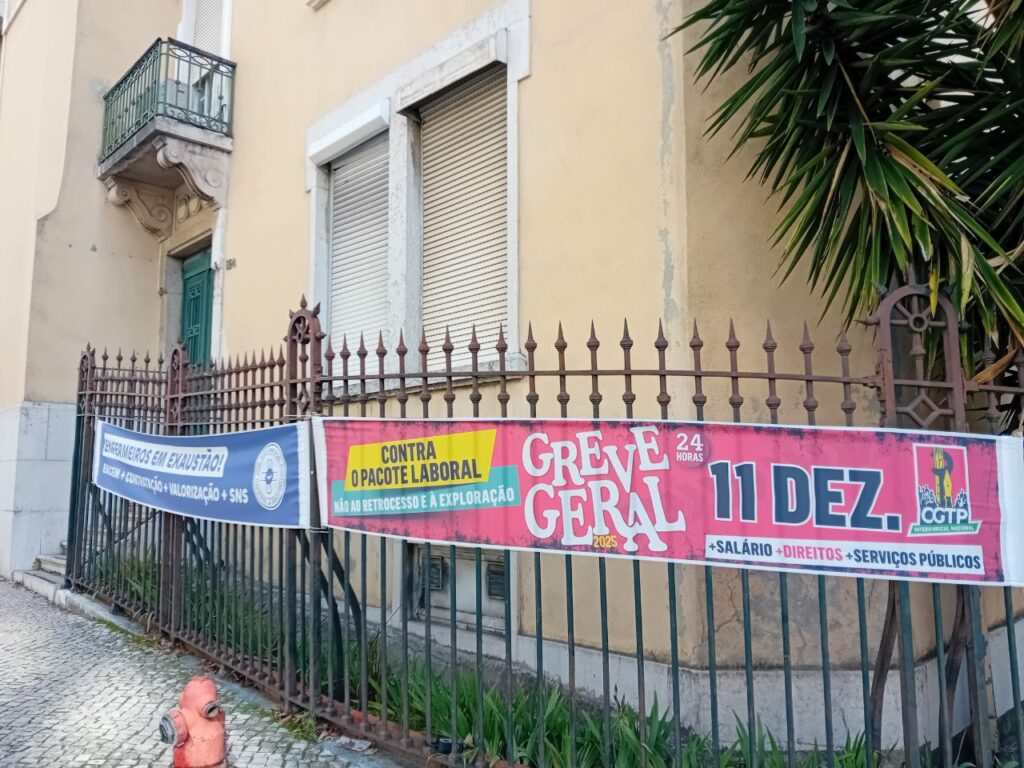
Walking through Lisbon, we saw posters in the streets calling for the general strike in Portugal on 11 December, the first after 13 years. Paulo told us that the current right-wing government wants to approve a package of labour laws that would constitute an unprecedented attack on the working class, undermining the right to strike, making it easier for companies to fire workers, and generally worsening working conditions. A law that mirrors right-wing government attacks on social rights throughout Europe, as we are also experiencing in Italy. We asked what expectations existed for this date, and he pointed out the issue of people having lost the habit of striking. Thirteen years without practising this form of struggle at the national level leads to alienation among workers and to young generations who have never experienced such a mobilisation. However, we believe it is an important and significant development that, in the face of a structural and authoritarian plan to suppress rights, an appropriate response is emerging that might reactivate a society capable of demanding better living conditions.
Based on these insights, we believe that the strike, as experienced in Italy last autumn and in other European countries, such as Belgium, must once again become a practised, convergent, and effective tool of struggle, capable of challenging the nodes of power, going beyond more traditional forms, and crossing national borders. As in imagining, for housing struggles, a European rent strike against the owners of the cities, which sets the perspective of confederating rebel cities in Europe.
To conclude, the trip to Lisbon by the Municipi Sociali of Bologna and ORDA was useful above all to begin to get to know different organisations, make new contacts, and start a comparison among European cities that is indispensable for us. This is not the time to withdraw into national spaces where Trump, Musk, Meloni, and Orbán want to confine us, but rather the time to look toward a spring of struggle that begins in the cities. Many questions remain for us: how can we circulate more effectively the proposal of an urban democratic confederalism? How can we strengthen the tools we have in the territories, whether trade-union or social in nature, within a commonly defined political project? How can we effectively combat rent extraction in our cities and fight more vigorously for both direct and indirect wages?
These are all questions that will bring us closer to the next meeting of the European Action Coalition, but above all that encourage us to struggle with greater determination in our own home.