After AfD’s victory in Saxony-Anhalt, Berlin was calling. So we packed our bags, put our ideas about a Mediterranean, confederal Europe of cities in order, and headed for the German capital. In these few lines, we recount what we saw, read, and exchanged during those fervent days leading up to the election.
Ah you loved me as a loser, but now you’re worried that I just might win.
You know the way to stop me, but you don’t have the discipline.
How many nights I prayed for this, to let my work begin.
First we take Manhattan, then we take Berlin
Berlin is in the middle of an election campaign, with the cold September weather and candidates’ flyers all over the city until the very last day. Rallies, campaign stalls, posters and signs hung from streetlights fill the streets. In some parts of the city, the AfD’s are placed higher than the others, high enough to try to escape the hands of those who, during the night, tear them down or deface them.
There is a sense of urban participation that goes beyond the distant and boring competition between political parties. Especially after the AfD’s victory in Saxony-Anhalt, the elections have become the point where a broader conflict comes together, one that is not exclusively electoral: a moment in which people express what kind of society they want to live in. The high turnout made this clear: 73% of the population went to the polls in the German capital this weekend.
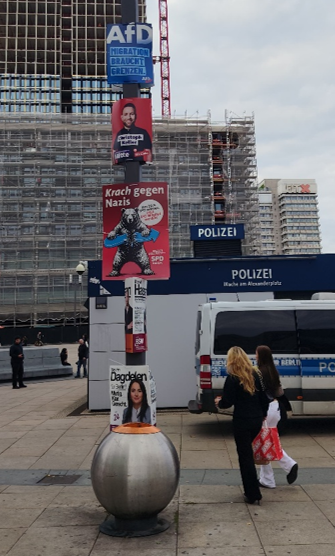
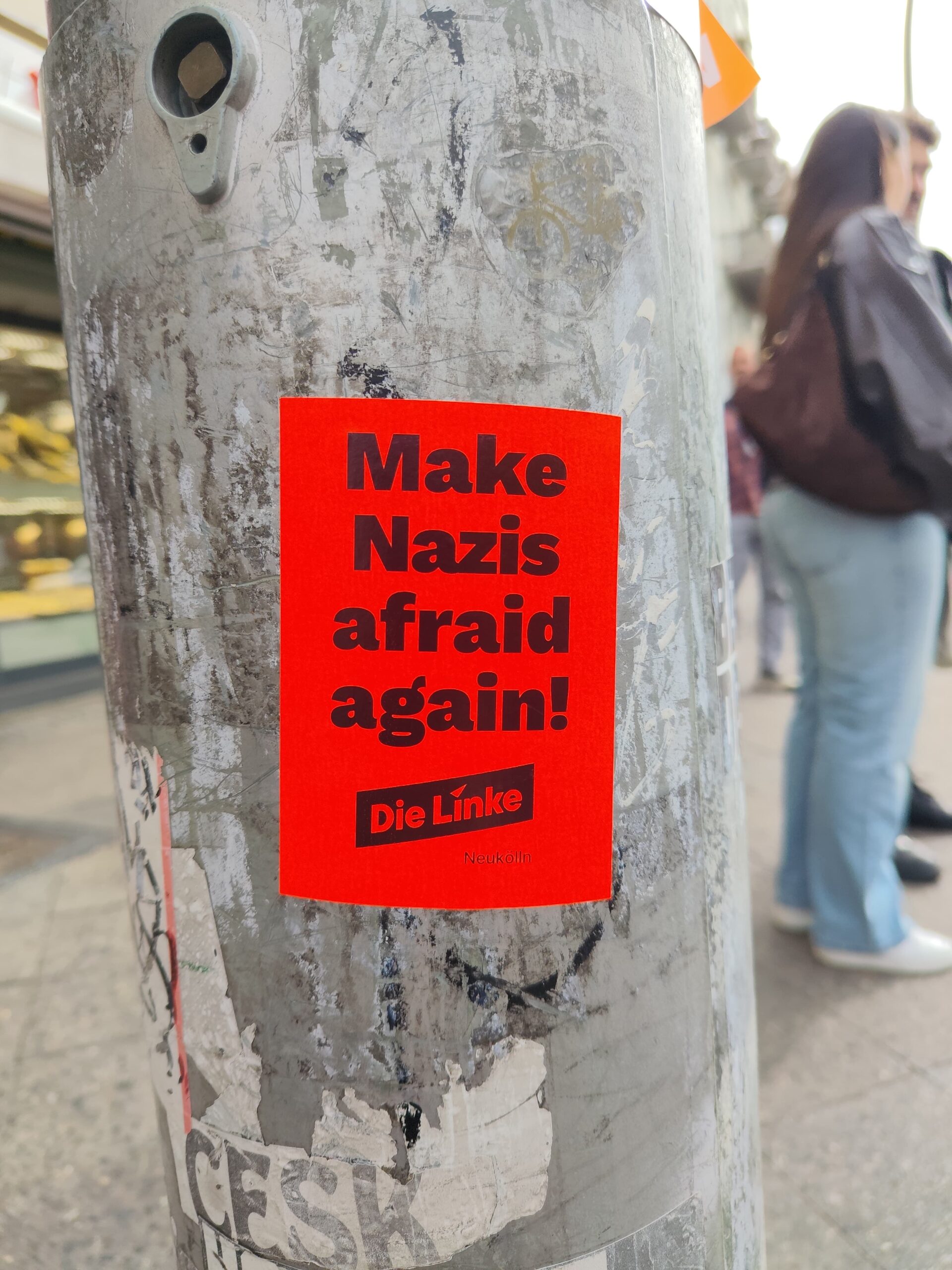
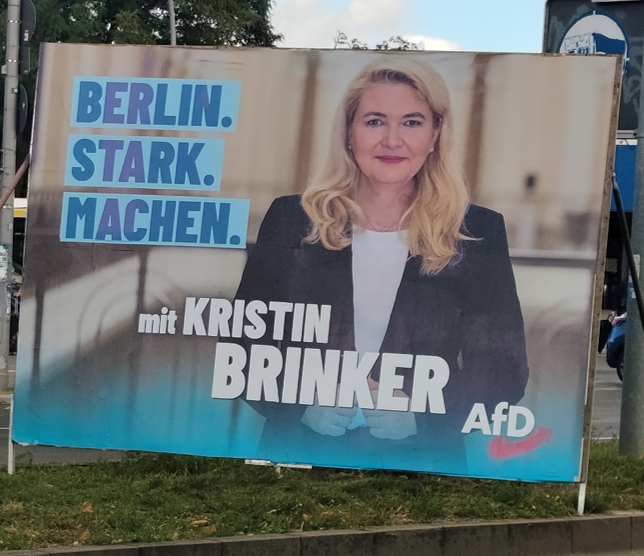
- AfD: Migration needs borders
- Die Linke: Make the Nazis afraid again
- AfD: Make. Berlin. Strong.
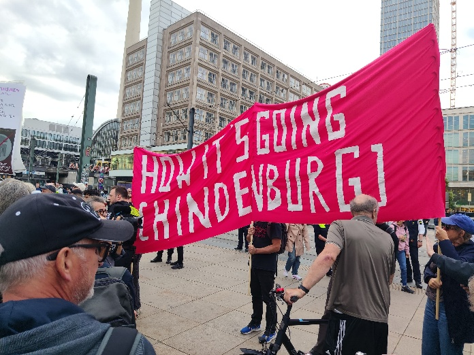
We find this conflict, alive and unfolding on several fronts, throughout our short trip to Berlin during the final days of the campaign. On Friday, immediately after arriving, we are swept into the protest against Sahra Wagenknecht’s final public speech at Alexanderplatz, packed with peace flags and messages against militarisation and in support of Putin. The “red-brown” leader left Die Linke in 2023, founding an ethno-populist and nationalist left-wing party which, at least following the vote in Saxony-Anhalt, is now considering forming a coalition with the AfD in order to enter government in the federal state.
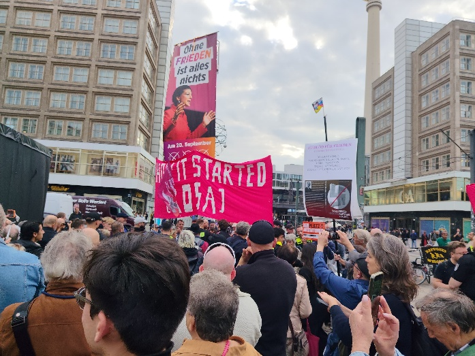
- BSW: Without peace, everything is in vain
- Protest banner: “How it started: RDSA”
- Protest banner: “How it is going: Hindenburg”
On Saturday morning, meanwhile, the annual pro-life rally supported by the CDU was accompanied by a transfeminist sit-in organised by Top B3rlin and other movement groups. A rally that celebrates the rights of fetuses and uses the lives of children with disabilities to restrict women’s freedom to make choices about their own bodies was met with the demand for a law legalising abortion in Germany, a right that has never been fully secured in the country. Two more images of the society, clashing in this contested terrain.
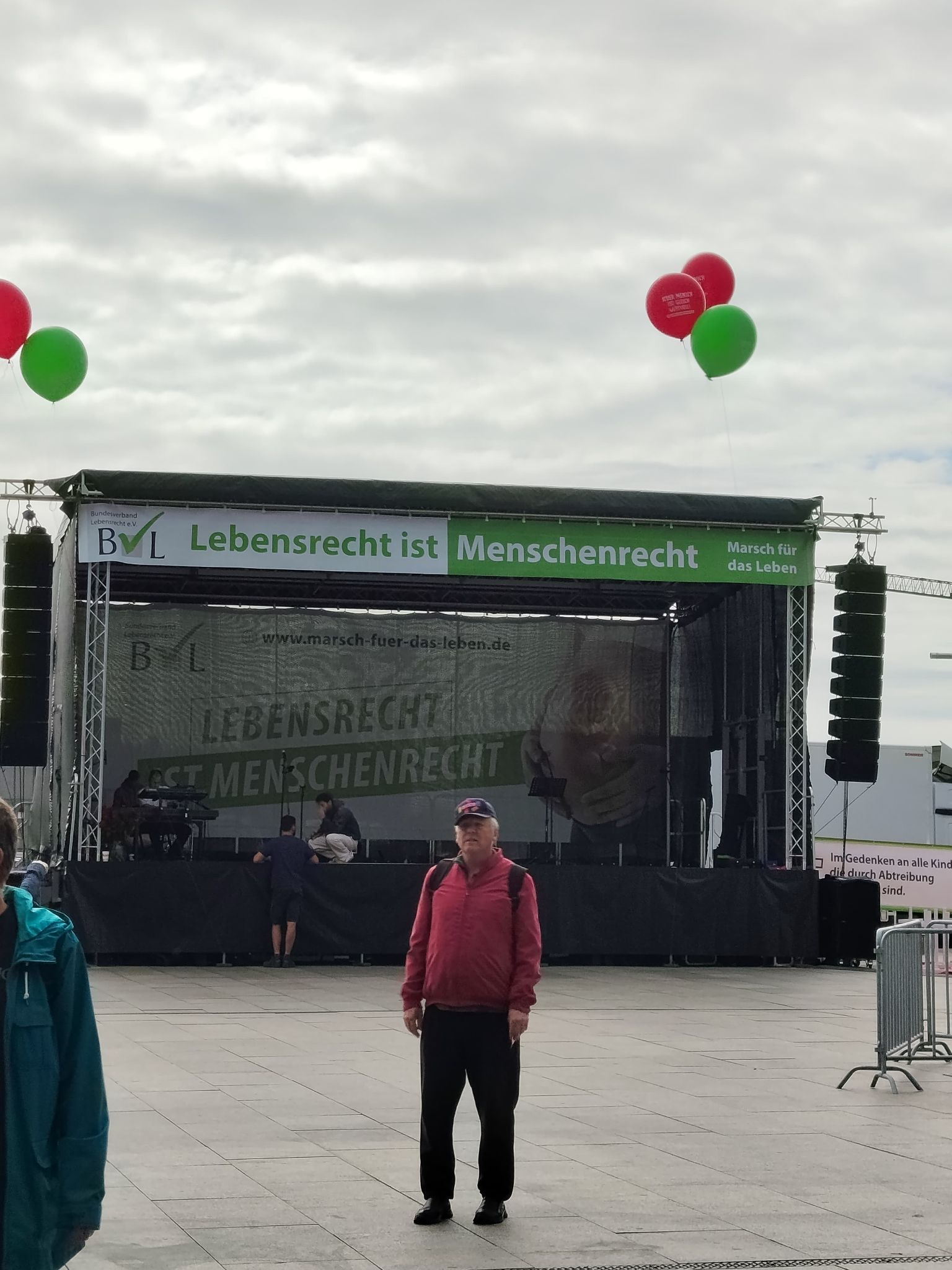
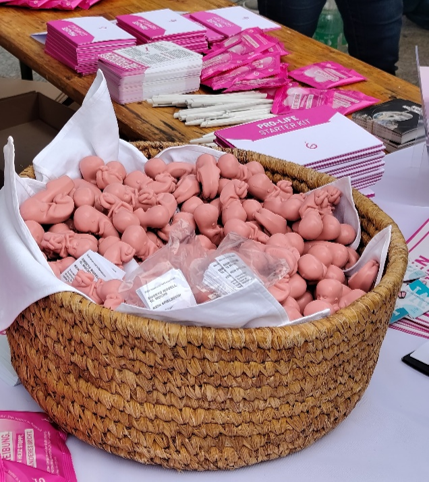
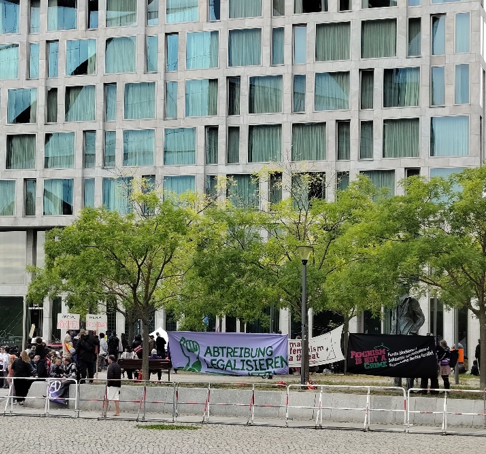
- The right to life is a human right
- Banner: “Legal abortion”
Elif’s victory
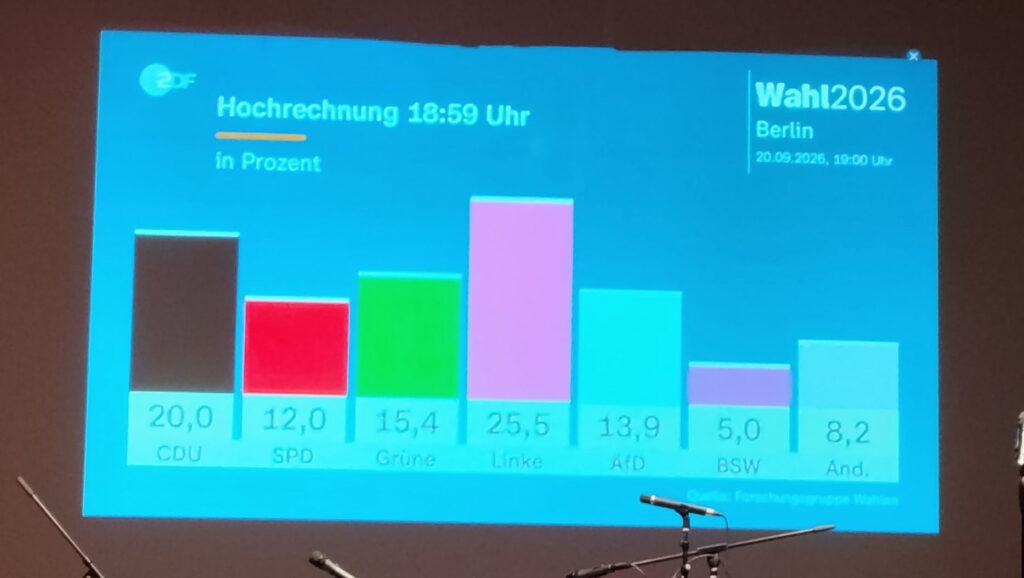
On Sunday 20 September, Die Linke’s mayoral candidate scored a landslide victory. With 25.7% of the vote, she came out ahead of all the other candidates.
In the capital, Die Linke presents itself not only as an alternative to the far right, which won 16.3% in Berlin while becoming the largest party in Mecklenburg-Western Pomerania, continuing to accumulate victories, but also to the CDU’s neoliberal reforms, which fell below 20% in Berlin and suffered a historic defeat in the region of Mecklenburg-Western Pomerania.
Over the past few months, the party has run a fierce electoral campaign, knocking on the doors of tens of thousands of people and distributing free meals in neighbourhood canteens.
In her campaign, Elif Eralp, born in Germany to Turkish parents who were trade unionists and emigrated for political reasons, focused on improving the material living conditions of the people who live and work in the city. The first challenge is to tackle the housing crisis, in a city devastated by major property funds and where people can no longer afford to pay their rent. After years of struggle and a political campaign that led the city to vote in 2021 on the expropriation of houses owned by property giants, politicians have never translated that decision into law. Eralp’s party therefore faces the task of restoring legal force to a democratic decision, imposing rent caps and implementing the expropriation and nationalisation of vacant housing owned by large property funds.
The balance of the coalitions will determine in the coming weeks whether a Linke–Greens–SPD government will emerge or whether the SPD and Greens will choose to govern with the CDU. The key player is the SPD, which two years ago had already avoided taking responsibility for turning the referendum result into law, despite having taken part in the referendum campaign.
The other topics of Die Linke’s campaign focus on the urban class struggle: against the rising cost of living, for public transport and for a different approach to waste collection and management. By focusing on material issues aimed at concretely transforming the city for everyone, rather than only for those who can afford it, Eralp has built a front against the far right, without calling for any “firewall”, but instead trying to convince the precarious urban working class, on the right and on the left, in the east and in the west.
This pragmatic approach is what has pushed thousands of new members to take part in the electoral campaign. As some comrades who have joined the party over the past couple of years told us, huge numbers of young people have joined neighbourhood teams in recent months to meet people door to door, dividing up shifts and covering large areas of the city. The Aktivista app has helped democratise this process, mapping ongoing actions and allowing anyone who downloaded it to participate. Every participant became a connector within this network, going door to door to talk to people, carrying out metropolitan inquiry and mapping needs across the neighbourhoods.
But the point is not only how Die Linke ran its campaign. It is also about understanding who has filled that political space and how a new social composition is using the party as a tool for organisation.
A new base using the party
The revitalisation of Die Linke’s grassroots base is a phenomenon that has developed over the past three years, driven by a number of factors. One of them is certainly the departure of Sahra Wagenknecht’s ethno-nationalist wing, which left Die Linke as an empty shell. There were two alternatives: disappear, or be inhabited by a new social composition, distant from the party leadership. Clearly, the second has won.
As Nicola Carella (a friend and comrade who has lived in Berlin for years) and some Die Linke members told us, over the past two years various collectives, committees and left-wing groups, very different from one another, have found in the party a large umbrella under which to exert political pressure and experience the ongoing conflict within German society in a more cohesive way, at least during electoral periods.
During the long night of celebrations, on Sunday we went to visit the Bloque Latinoamericano, an anti-capitalist political group that supports Spanish-speaking people in Berlin, both socially and in their workplace struggles, particularly in the healthcare sector. Although the Bloque is not part of Die Linke, it saw these elections as an opportunity. It therefore supported the electoral campaign, pushing for the Spanish-speaking community, which is less represented than others, to be heard and to claim political space. The relationship between movement and party seems clear: “During the elections, we gave our support. Now we need to see what the coalitions will look like and whether Die Linke will be in government or in opposition. Our role, in any case, will be to put pressure on the streets to make sure the points in the programme are implemented.”
A hybrid citizenship
Die Linke has been taken up by huge numbers of young people, mainly women, with varying degrees of political experience and often a migrant background. It is therefore no surprise that the beating heart of Die Linke’s success in these elections is a neighbourhood like Neukölln: a working-class neighbourhood where many young people and students live, and home to Turkish, Kurdish, Palestinian and many other non-German communities.
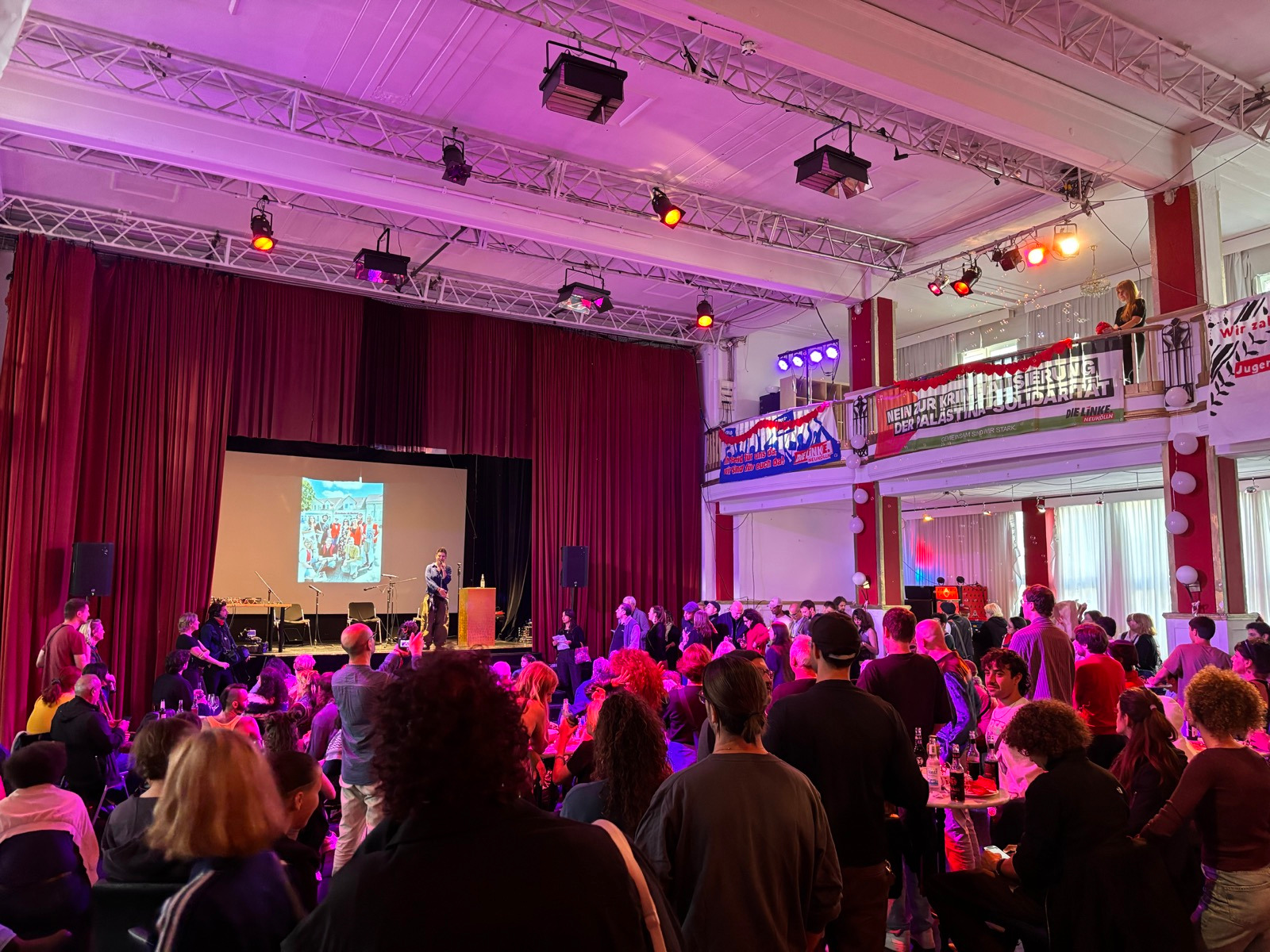
At the party headquarters on Kottbusser Damm on Sunday afternoon, after the results were projected, the district candidate took to the stage and shouted: “To discredit us, they called us antisemites and jihadists. But despite their lies, we still won!” The “Die Linke Neukölln” phenomenon has in fact sparked controversy both on the right and on the left, with some SPD figures questioning whether a coalition could be formed if candidates from this neighbourhood were elected. This was practically inevitable, given that the party won 50% of the vote in the district, providing a decisive boost to its landslide victory.
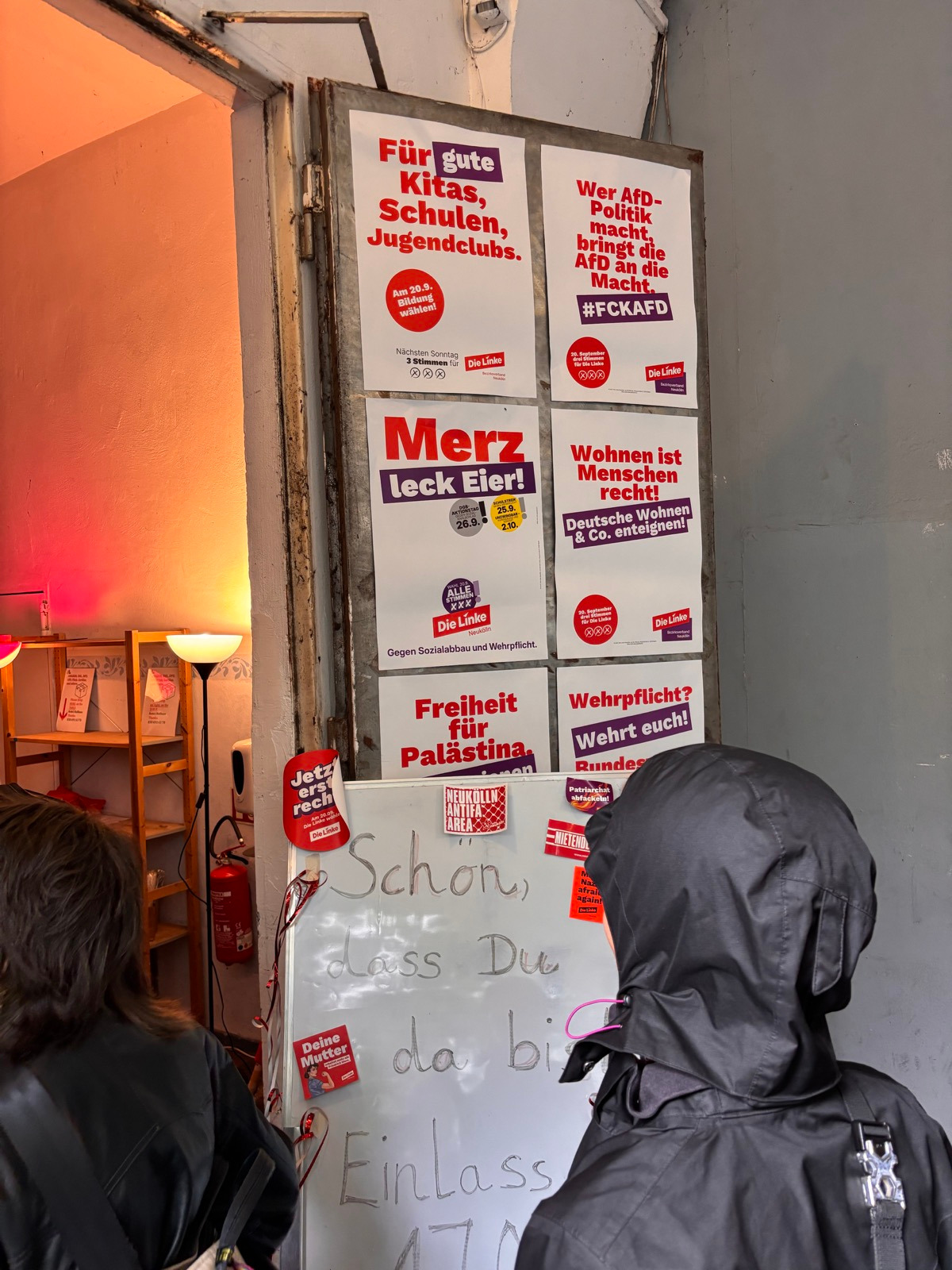
- For good nurseries, schools and youth centres; Anyone who does politics with the AfD brings them to power; Merz, lick my balls; Housing is a human right; Freedom for Palestine; Compulsory military service? Rebel!
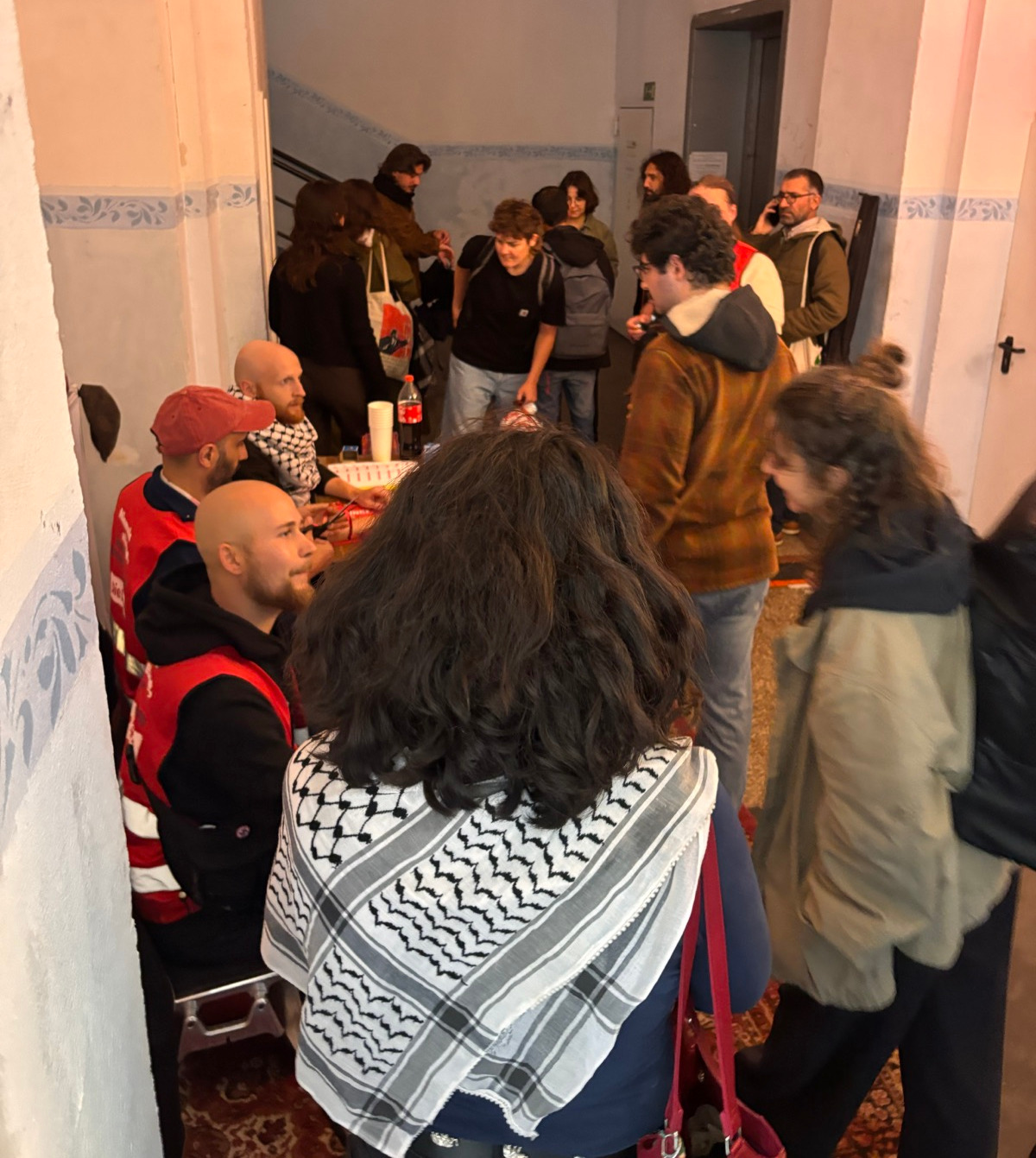
In the room where the results were being watched on Sunday afternoon, practically everyone was wearing a keffiyeh. A strange sight in a German political space, where Palestine has very often been an unspeakable taboo. What Die Linke activists tell us is that the genocide and the protests for Gaza have become a driving force that has shaken up political categories across the country. Although Palestine is one of the most divisive issues in Germany, by far more so than Ukraine, Die Linke has managed to rebuild its image around this fracture, reopening a space capable of embracing an entire generation, whether German or mixed, but unquestionably Berliners, who cannot stand submitting to a silence imposed by a sense of guilt they feel does not belong to them.
More than an identity issue or a moral battle, opposition to the genocide in this city seems to function as a rupture between the old world and the new one, overcoming divisions and polarisation in the search for new forms of coexistence in the city. This second aspect has certainly given the party new momentum to reimagine itself.
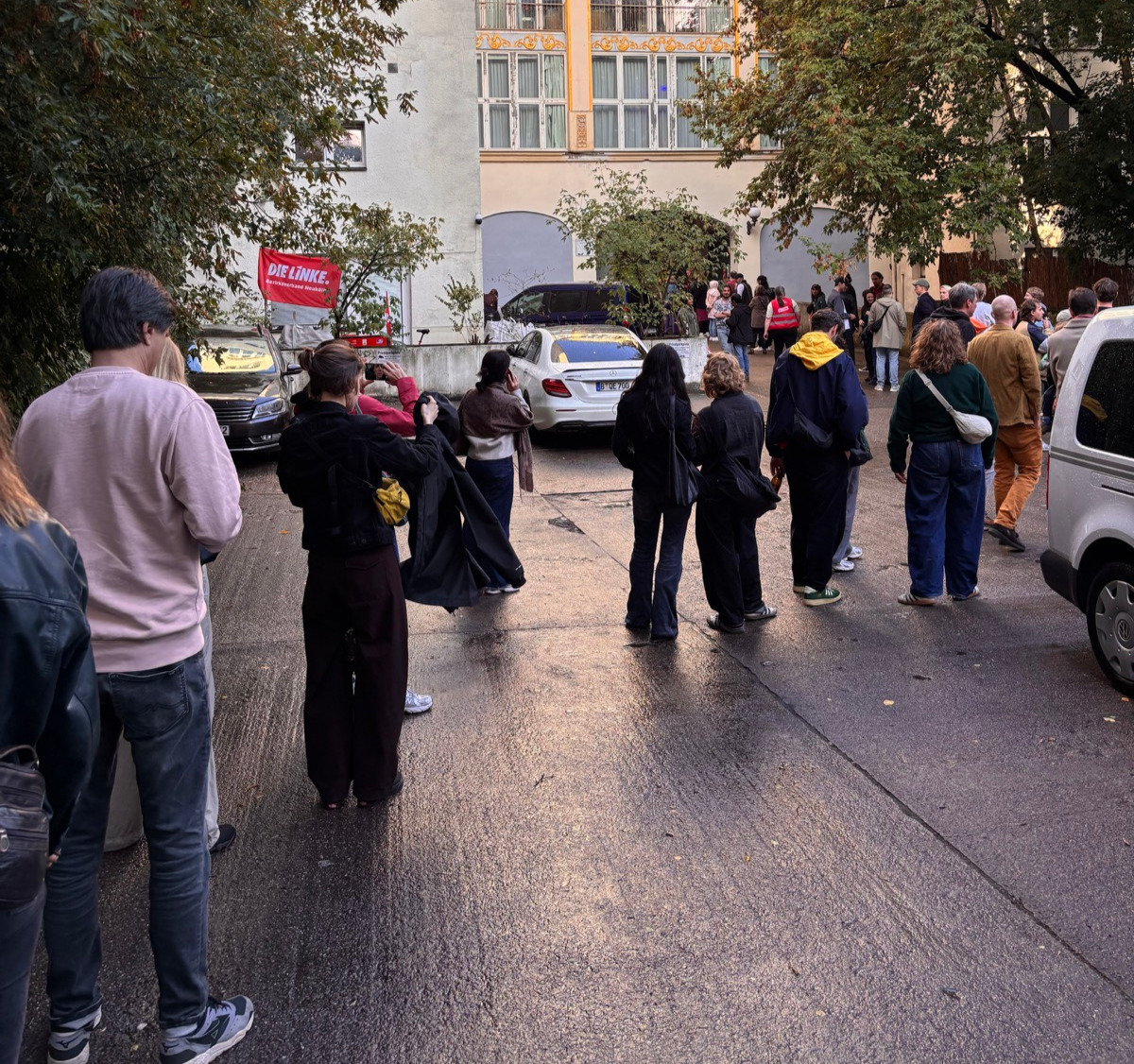
What becomes evident when walking around Neukölln is that Berlin, the quintessential European capital, has a hybrid, trans-ethnic population, one that might once have been described as migrant, but which today is rooted, to varying degrees historically, in metropolitan society and wants to be able to decide its own future. For the right, this is the part of Europe that needs to be “remigrated”. Die Linke, on the other hand, has understood how to connect with and win the trust of this more precarious, mixed and hybrid part of the city, without turning it into a question of identity, but rather one of class. By focusing on improving life for everyone, including the less affluent metropolitan classes, Die Linke has also won the trust of neighbourhoods such as Pankow and Köpenick, pushing into the eastern part of the city and taking votes away from the right.
From Berlin to Europe
2027 will be a year of elections across the old continent, an electoral cycle that risks reshaping European geopolitics to the alt-right wing. The question many are asking now is: will it be possible to have a so-called Mamdani effect, or a Linke effect, assuming they are even the same thing, in other countries as well? What is clear is that elections are becoming a battleground not only over political representation, but over competing visions of society. And they take on a new meaning when viewed from a continental perspective.
Certainly, the crumbling of the centre and the institutional left’s shift to the right in some countries, but above all in some cities, is creating space for a more radical left-wing alternative. A left that wins with pragmatic, class-based proposals, without rejecting civil rights, but making them its own also through the representation of minorities among its candidates and leaders, seeking to resist fascism and the new financial command, and to reclaim space for everyone to live.
It is difficult to predict whether the same conditions will emerge elsewhere. In any case, we cannot afford to be so short-sighted as to overlook the elections in France, Spain, Italy, and other countries to come as arenas in which to act within this conflict, in hybrid and not necessarily linear ways. The plural demonstrations against the AfD that have swept through Erfurt and Halle are the other side of the same coin.
The question to ask, then, is perhaps another: how can we move through these electoral moments beyond national boundaries, and do so with a social wave made up of that urban, mixed, transethnic, queer, multi-religious precariat that already constitutes Europe’s capitals and perhaps, more broadly, our new Europe?
The point is not to choose between focusing on the movement or on the electoral option. It is to allow one to grow within the other, depending on the moment and the opportunities, with the aim of building a new European political subject beyond identity divisions, capable of pursuing a class struggle and overturning the balance of forces.